

Why Thermostat Repair Matters for Your Home and Budget
Thermostat repair is an often-overlooked solution to high energy bills and uncomfortable indoor temperatures. A malfunctioning thermostat can cause your HVAC system to run constantly, shut down unexpectedly, or fail to maintain your set temperature—all while driving up monthly costs.
Quick Answer: Common Thermostat Problems and Solutions
- Blank Screen – Replace batteries or check circuit breaker
- Inaccurate Temperature – Clean interior and level the unit
- System Won’t Turn On/Off – Check power settings and inspect wiring
- Short Cycling – Verify thermostat placement away from heat sources
- Rising Energy Bills – Consider replacement if thermostat is over 10 years old
Many thermostat issues are simple to diagnose and fix yourself, potentially saving you $50 to $500 in professional repair costs. Basic maintenance like replacing batteries or cleaning dust from internal components can often restore your system to proper working order.
However, knowing when to call a professional is crucial. A faulty thermostat puts unnecessary strain on your HVAC system, shortening its lifespan and increasing the risk of expensive failures. With the average cost of HVAC repairs around $350 and major repairs reaching $2,000, catching thermostat problems early can save you thousands.
This guide will walk you through budget-friendly DIY repairs, help you identify when professional help is necessary, and explain when upgrading to a modern thermostat makes financial sense.
Is Your Thermostat Broken? 7 Telltale Signs
Your thermostat is the brain of your HVAC system, telling your furnace and air conditioner when to work. When it malfunctions, it sends out clear distress signals. Recognizing these signs of a needed thermostat repair is the first step toward restoring comfort and efficiency to your home.
Here are the telltale signs that your thermostat is acting up:
HVAC System Won’t Turn On or Off: You adjust the temperature, but the system doesn’t respond, or it runs endlessly. This communication breakdown is a major red flag.
Short Cycling: Your furnace or AC turns on and off in brief, frequent bursts. This is a huge energy waster and puts immense strain on expensive HVAC components.
Inaccurate Temperature Readings: The thermostat’s reading doesn’t match how the room actually feels. This causes uncomfortable temperature swings and makes your system work harder based on bad information.
Blank Screen or Unresponsive Controls: A blank screen on a digital model often points to a power issue, like dead batteries or a tripped breaker. If the screen is on but ignores your commands, the internal components may be failing.
Rising Energy Bills: A sudden, unexplained spike in your utility bills can be caused by a faulty thermostat forcing your HVAC system to run longer or less efficiently.
Thermostat is Over 10 Years Old: Like any electronic device, thermostats have a lifespan. After a decade, internal parts wear out, reducing accuracy and reliability.
Inconsistent Heating and Cooling: Some rooms are hot while others are cold. While this can indicate ductwork issues, a malfunctioning thermostat is often a primary cause.
If these issues sound familiar, many can be addressed with simple troubleshooting. For more specific guidance, see our guide on Common Fixes for an AC Thermostat Not Working.
Consequences of a Malfunctioning Thermostat
Ignoring a faulty thermostat leads to more than just discomfort. It causes increased utility costs as your system runs inefficiently. It also puts significant strain on HVAC components, leading to premature wear and expensive repairs. This results in uneven heating and cooling and an overall reduced home comfort. Prompt thermostat repair prevents these costly and uncomfortable consequences.
Your Step-by-Step DIY Thermostat Repair Guide
Many common thermostat issues are surprisingly simple to fix with basic tools and a little patience. Tackling these problems yourself can save you a service call, which can range from $150 to $500 for an inspection, plus hourly rates.
This section provides a guide for homeowners to perform basic thermostat repair themselves, potentially saving money on a service call.
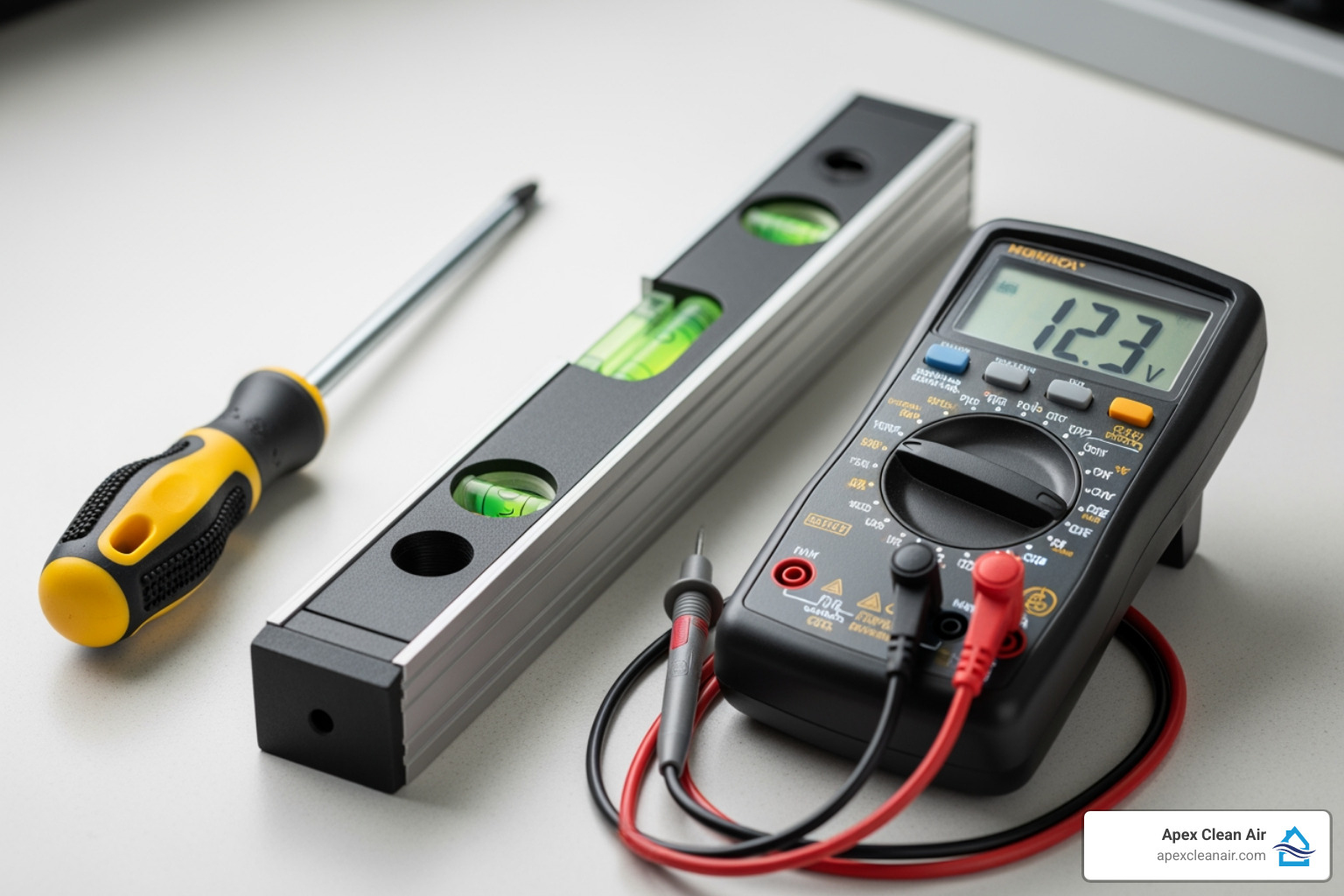
1. Check the Basics: Power and Settings
Often, the simplest solution is the right one. Before assuming a major failure, run through these fundamental checks:
- Thermostat Settings: Ensure your thermostat is set to “Heat” or “Cool” as needed for the season. Check that the fan is on “Auto,” not “On,” to prevent it from running continuously.
- Temperature Setting: Try adjusting the temperature 5 degrees above (for heat) or below (for cool) the current room temperature. You should hear a click and the system should activate within a few minutes.
- Circuit Breaker: Head to your electrical panel and look for a tripped breaker. Flip it completely off, then firmly back on. Your HVAC unit may also have a blown fuse, so check your system’s manual for its location if the breaker is fine.
2. Replace the Batteries
Dead batteries are a frequent culprit for a non-working thermostat. If your digital thermostat’s screen is blank, flickering, or shows a low battery indicator, this should be your first step. Most models use common battery types like AA or AAA. Check your owner’s manual for the correct type and replacement instructions.
3. Clean the Interior
Dust and debris can interfere with sensors and connections, leading to inaccurate readings. Gently pull off the thermostat’s cover to inspect the inside. Use a can of canned air or a soft brush to carefully clean the internal components. For older mechanical thermostats, you can slide a piece of paper between the metal contacts to clean them. Avoid touching any delicate parts with your fingers.
4. Check for Loose Wires and Connections
Wiring issues can interrupt communication between the thermostat and the HVAC system. Safety First: Always turn off the power to your HVAC system at the circuit breaker before touching any wires.
Once the power is off, remove the cover and inspect the wires connected to the terminals (labeled R, W, Y, etc.). Use a small screwdriver to gently tighten any loose screws to ensure secure connections. Look for any signs of corroded wires. If you find corrosion or a wire has detached, it’s best to call a professional. Sudden power loss could also indicate power source issues with the transformer, which requires an expert.
5. Level the Thermostat
An unlevel thermostat can cause inaccurate readings, especially in older models with a mercury switch. These rely on a perfectly level position for the mercury to make proper contact. Use a small torpedo level to check and adjust your thermostat’s mounting if it’s crooked.
Also, check the thermostat’s location. Ensure it has proper placement away from drafts and direct sunlight, or heat sources like lamps and vents. An incorrect location will give a false reading of your home’s ambient temperature, causing the system to run improperly.
When to Call a Professional for Thermostat Repair
While DIY repairs are satisfying, some situations require a professional to ensure safety and prevent more expensive damage. Attempting complex thermostat repair without proper training can create safety hazards and lead to costlier problems.
This section outlines situations where a DIY fix is not advisable and professional help is necessary to avoid further damage or safety risks.
Signs You Need an Expert for Thermostat Repair
It’s time to call us at Apex Clean Air if you encounter any of the following:
- DIY Steps Failed: If you’ve tried the basic troubleshooting steps without success, the problem is likely more complex and requires professional diagnostic tools.
- Persistent Issues: Problems that return shortly after a fix (like a screen that goes blank again) point to a deeper, underlying malfunction.
- Humming or Buzzing Sounds: Unusual noises from the thermostat or HVAC unit often indicate electrical issues with wiring or the transformer that need immediate attention.
- Burnt Smell from Wiring: This is a serious fire hazard. Turn off power at the circuit breaker immediately and call a professional. Do not investigate this on your own.
- Complex Wiring: Systems with heat pumps or multi-stage heating and cooling have intricate wiring. A single mistake can damage expensive components.
- Suspected Faulty Transformer: Testing and replacing the transformer, which powers your thermostat, requires specialized tools and knowledge and can be dangerous if done incorrectly.
What to Expect from a Professional Diagnostic
When an Apex Clean Air technician arrives, they perform a systematic diagnosis to find the root cause of the problem.
- Multimeter Testing: We use a multimeter to check voltage and continuity, definitively telling us if power is flowing correctly between the thermostat and HVAC unit.
- Wiring Inspection: We trace wiring from the thermostat to the air handler, checking all connections for corrosion, damage, or loose terminals.
- System Compatibility Check: We verify that your thermostat is correctly matched and configured for your specific HVAC equipment, as a mismatch can mimic a malfunction.
- Full System Check: Our professional diagnostic steps include inspecting other components like transformers, relays, and control boards to rule out other HVAC issues. We can also read trouble codes from modern systems to pinpoint the problem.
Our goal is to accurately identify the issue, whether it’s a simple thermostat repair or a more complex system problem, and provide you with the most effective solution. Ready to get your comfort back? Explore how to Maximize Comfort with Apex Clean Air’s Expert Thermostat Services.
Understanding Costs: Repair vs. Replacement
When your thermostat fails, you have to decide: repair or replace? Let’s break down the costs of thermostat repair versus replacement to help you make the best decision for your budget.
The Cost of Professional Thermostat Repair
Costs can vary significantly depending on the problem.
DIY Repair: If you fix it yourself, costs are minimal. Expect to spend $5 to $20 for new batteries or $5 to $15 for cleaning supplies. A successful DIY thermostat repair could cost as little as $5 to $65.
Professional Repair: For complex issues, hiring an expert is the smartest route. This typically involves an hourly labor rate of $50 to $150 plus a service call fee of $150 to $500. A professional thermostat repair could cost anywhere from $50 to $500.
If the thermostat must be replaced, a new unit can cost $15 for a basic model to $250 for a smart thermostat. Professional installation adds another $100 to $350. While this seems like a larger upfront cost, incorrect installation can damage your HVAC system, making professional service a wise investment.
Is It Time for an Upgrade?
Sometimes, the best “repair” is an upgrade, especially if your thermostat is old or constantly causing problems.
Most thermostats have a lifespan of about 10 years. If yours is older, its internal components are likely wearing out. Upgrading can prevent future breakdowns and improve energy efficiency.
A programmable thermostat is a great step up, allowing you to set heating and cooling schedules to save energy when you’re away. This simple change offers noticeable savings on utility bills.
For the biggest impact, consider a smart thermostat. These Wi-Fi-enabled devices revolutionize home comfort and energy efficiency:
- Learn your habits: They learn your routines and automatically optimize settings for comfort and savings.
- Offer remote control via Wi-Fi: Adjust your home’s climate from anywhere using your smartphone.
- Integrate with home automation: Connect with other smart devices for seamless, responsive climate control.
- Boost energy efficiency: By intelligently managing your HVAC system, they can significantly cut your utility bills.
- Detect issues early: Some models monitor your HVAC system and alert you to potential problems before they become major breakdowns.
Upgrading from an old model offers tangible financial and environmental benefits. If you’re considering a new thermostat, Apex Clean Air can help. Explore our Thermostat Repair & Installation in Denver, CO services today.
Frequently Asked Questions about Thermostat Repair
We get a lot of questions about thermostats, which are central to home comfort and energy use. Here are answers to some of the most common queries.
How long does a thermostat last?
Most thermostats have a lifespan of about 10 years. After a decade, their internal components can wear out, leading to inaccurate readings, failure, higher energy bills, and reduced comfort. While some may last longer, their efficiency often declines. If your thermostat is over 10 years old, it’s wise to consider a replacement.
Can a bad thermostat ruin my HVAC system?
Yes, a malfunctioning thermostat can cause serious damage. The biggest risk is “short cycling,” where the thermostat signals your HVAC system to turn on and off in rapid, short bursts. This puts immense stress on expensive components like the AC compressor, leading to premature failure and costly repairs. A faulty thermostat can also cause the system to run constantly or not at all, shortening the lifespan of your entire HVAC unit. Timely thermostat repair is a smart investment to protect your system.
How do I know if the problem is my thermostat or my furnace/AC?
This is a common diagnostic challenge. You can perform a simple bypass test to help determine the source of the problem.
Warning: Only attempt this if you are comfortable with low-voltage wiring. Always turn off power to your HVAC system at the circuit breaker before touching any wires to prevent electrical hazards.
- Power Down: Turn off the breaker for your furnace and air conditioner.
- Access Wires: Gently remove the thermostat cover.
- Bypass the Thermostat: Carefully twist the wires for the function you want to test. For example, connect the R (power) wire and the W (heat) wire to test the heat. To test the AC, connect the R wire and the Y (cool) wire.
- Restore Power: Turn the breaker back on.
- Observe: If the corresponding system (furnace or AC) turns on, the problem is likely your thermostat. If it still doesn’t run, the issue is probably with the HVAC unit itself, and it’s time to call a professional.
If you are at all unsure, call a qualified HVAC technician for a safe and accurate diagnosis.
Your Next Step for a Comfortable and Efficient Home
You are now equipped with the knowledge to save money and keep your home comfortable. Many thermostat repair issues are simple, budget-friendly fixes. Swapping batteries, tightening a wire, or leveling the unit can solve common problems, extend the life of your HVAC system, and keep energy bills in check.
However, knowing your limits is crucial. For persistent problems, strange noises, or complex wiring, professional expertise is your best investment. Our certified technicians at Apex Clean Air have the tools and training to diagnose and fix issues correctly the first time.
If your thermostat is over 10 years old, consider a smart thermostat upgrade. These modern devices save money by learning your habits and allowing remote control, often paying for themselves in energy savings within a few years.
We’re here to help, whether you need a quick repair, a full replacement, or advice on choosing the right thermostat. For reliable, guaranteed service in Salt Lake City, Denver, Boise, and surrounding areas—including Ogden, Provo, Sandy, West Jordan, Arvada, Aurora, Boulder, Broomfield, Centennial, Colorado Springs, Commerce City, Englewood, Erie, Highlands Ranch, Lafayette, Lakewood, Littleton, Northglenn, Thornton, Westminster, and Wheat Ridge—we have you covered.
Ready to take the next step? Explore our comprehensive Thermostat Repair & Installation services today. We guarantee our work and our prices, because your comfort and peace of mind matter to us.